Hey there! As a supplier of Pasteur pipettes, I often get asked if these handy little tools can be used for transferring buffers. Well, let’s dive right into it and explore this question in detail. Pasteur Pipette
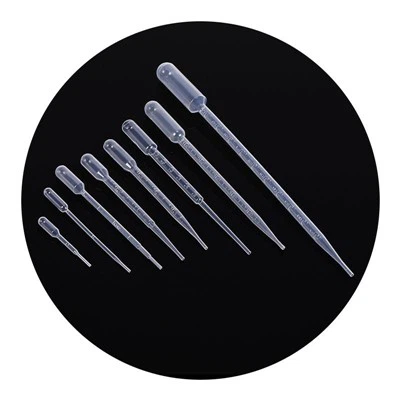
First off, what exactly is a Pasteur pipette? It’s a simple, yet incredibly useful laboratory tool. It’s basically a thin glass tube with a tapered end and a rubber bulb at the other. You squeeze the bulb, place the tip in a liquid, and then release the bulb to draw the liquid up into the tube. Easy peasy, right?
Now, when it comes to buffers, they’re a big deal in the lab. Buffers are solutions that can resist changes in pH when small amounts of acid or base are added. They’re used in all sorts of experiments, from cell culture to DNA analysis. So, can a Pasteur pipette be used to transfer these important buffers? The short answer is yes, but there are some things to keep in mind.
One of the main advantages of using a Pasteur pipette for buffer transfer is its simplicity. It’s a low – tech solution that doesn’t require any fancy equipment or electricity. You can just grab it and start transferring your buffer. It’s also quite versatile. You can use it to transfer small or medium amounts of buffer, depending on the size of the pipette. For example, if you need to transfer just a few drops of a buffer for a micro – scale experiment, a Pasteur pipette is perfect.
Another benefit is that Pasteur pipettes are relatively inexpensive. As a supplier, I know that cost is often a concern for labs, especially those on a tight budget. You can buy a pack of Pasteur pipettes for a reasonable price, and they can be used multiple times if properly cleaned and sterilized.
However, there are also some limitations. One of the biggest issues is accuracy. Pasteur pipettes are not as precise as some other types of pipetting devices, like micropipettes. When you’re transferring buffers, especially in experiments where the exact volume is crucial, the lack of precision can be a problem. For instance, in a PCR reaction, even a small error in the buffer volume can lead to inaccurate results.
Another thing to consider is contamination. Buffers are often used in sensitive experiments, and any contamination can mess up the results. If the Pasteur pipette isn’t properly cleaned and sterilized between uses, it can introduce unwanted substances into the buffer. This is why it’s important to follow strict cleaning and sterilization procedures. For example, you can soak the pipettes in a cleaning solution, rinse them thoroughly, and then autoclave them to ensure they’re free of contaminants.
Let’s talk about the types of buffers. There are different kinds of buffers, such as phosphate – buffered saline (PBS), Tris – HCl buffers, and acetate buffers. Each type has its own properties, and some may be more suitable for transfer with a Pasteur pipette than others. For example, buffers with a high viscosity might be a bit more difficult to draw up into a Pasteur pipette compared to less viscous ones.
In some cases, the chemical composition of the buffer can also affect the suitability of a Pasteur pipette. Some buffers may react with the glass of the pipette over time. For example, strong alkaline buffers might slowly etch the glass, which could potentially contaminate the buffer or change its properties. So, it’s important to know the chemical properties of the buffer you’re working with and choose the appropriate pipetting method.
If you’re working with small volumes of buffer, say less than 1 ml, a Pasteur pipette can be a great option. It allows you to have a certain degree of control over the transfer. You can easily adjust the amount of buffer you’re taking up by squeezing the bulb more or less. But for larger volumes, say several milliliters or more, you might want to consider using a different method, like a graduated cylinder or a larger pipetting device.
Now, let’s think about the workflow in the lab. Using a Pasteur pipette for buffer transfer can be a quick and easy way to get the job done, especially if you’re in a hurry. You don’t have to spend time setting up a more complex pipetting system. However, if you’re doing a high – throughput experiment where you need to transfer the same volume of buffer multiple times, a more automated or semi – automated pipetting system might be more efficient.
In conclusion, a Pasteur pipette can definitely be used for transferring buffers, but it has its pros and cons. It’s a simple, inexpensive, and versatile tool, but it lacks precision and can be a source of contamination if not used properly. Whether you should use a Pasteur pipette for buffer transfer depends on your specific experiment, the volume of buffer you need to transfer, and the level of precision required.
If you’re in the market for high – quality Pasteur pipettes for your buffer transfer needs, don’t hesitate to reach out. We’ve got a great selection of Pasteur pipettes that are suitable for a variety of lab applications. Contact us to discuss your requirements and start a procurement discussion. We’re here to help you find the best solution for your lab.
Glass Petri Dishes References:
- Laboratory Manual for General Biology
- Principles of Biochemistry textbooks
Taizhou Yukang Medical Devices Co., Ltd.
As one of the leading pasteur pipette manufacturers and suppliers in China, we warmly welcome you to buy customized pasteur pipette at competitive price from our factory. If you have any enquiry about quotation, please feel free to email us.
Address: Heheng Village, Shengao Town, Jiangyan District, Taizhou City
E-mail: taizhouyukang@163.com
WebSite: https://www.tzykylqx.com/
