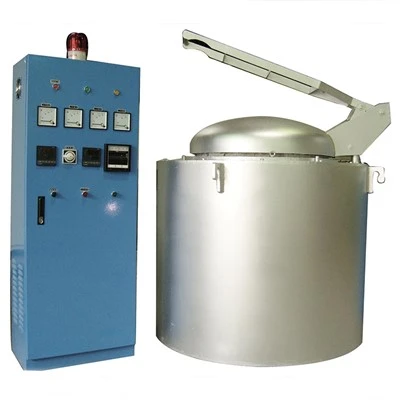
Hey there! If you’re in the business of using crucible furnaces, you know how crucial it is to measure temperature accurately. As a crucible furnace supplier, I’ve seen firsthand the challenges that come with getting those temperature readings just right. In this blog, I’m gonna share some tips and tricks on how to measure the temperature in a crucible furnace accurately. Crucible Furnace
Why Accurate Temperature Measurement Matters
First off, let’s talk about why accurate temperature measurement is such a big deal. In a crucible furnace, the temperature plays a key role in determining the quality of the metals or materials you’re melting. If the temperature is too low, the metal might not melt completely, leading to inconsistent quality and potentially causing issues further down the production line. On the other hand, if the temperature is too high, you could end up with overheating, which can damage the crucible, the furnace itself, or even cause the metal to oxidize or lose some of its desirable properties.
Accurate temperature measurement also helps with energy efficiency. Running a furnace at the right temperature means you’re not wasting energy by overheating. This not only saves you money on your energy bills but also makes your operations more environmentally friendly.
Types of Temperature Measurement Devices
Thermocouples
Thermocouples are one of the most commonly used devices for measuring temperature in crucible furnaces. They work based on the principle of the Seebeck effect, which means when two different metals are joined at two points and there’s a temperature difference between those points, a voltage is generated. This voltage can then be measured and converted into a temperature reading.
One of the great things about thermocouples is that they’re pretty durable. They can withstand high temperatures and harsh environments, which are common in crucible furnace applications. They’re also relatively inexpensive and easy to install. However, they do have some limitations. Over time, the accuracy of a thermocouple can degrade due to factors like oxidation and mechanical stress. It’s important to regularlly calibrate your thermocouples to ensure accurate readings.
Resistance Temperature Detectors (RTDs)
RTDs work by measuring the change in electrical resistance of a metal as its temperature changes. They’re known for their high accuracy and stability. RTDs are less susceptible to drift over time compared to thermocouples, which means you can rely on them to give you consistent temperature readings for a longer period.
However, RTDs are more expensive than thermocouples, and they’re not as rugged. They’re more sensitive to mechanical shock and vibration, so they need to be handled with care. In a crucible furnace environment, you need to make sure the RTD is properly protected to avoid damage.
Infrared Thermometers
Infrared thermometers measure the temperature of an object by detecting the infrared radiation it emits. They’re non – contact devices, which means you don’t have to physically touch the object to measure its temperature. This is a big advantage in a crucible furnace, where the high temperatures and molten metals can be dangerous to approach.
Infrared thermometers can provide quick temperature readings, and they’re useful for measuring the temperature of the surface of the molten metal or the crucible itself. But they have some drawbacks. They can be affected by factors like the emissivity of the object being measured and the presence of dust or smoke in the furnace. You need to make sure the infrared thermometer is properly calibrated and that you’re taking into account the emissivity of the material you’re measuring.
Installation and Placement of Temperature Measurement Devices
Thermocouples and RTDs
When installing thermocouples or RTDs in a crucible furnace, placement is crucial. You want to put the sensor in a location where it can accurately measure the temperature of the molten metal. A common approach is to insert the sensor through a hole in the side or the lid of the furnace, making sure it reaches into the molten metal.
It’s important to use a protective sheath to shield the sensor from the corrosive effects of the molten metal and the high – temperature environment. You also need to make sure the installation is secure to prevent any movement or vibration that could affect the accuracy of the readings.
Infrared Thermometers
For infrared thermometers, you need to place them in a position where they have a clear line of sight to the object you’re measuring. This might mean mounting the thermometer on the outside of the furnace, aiming it through a viewing port. You need to keep the viewing port clean to ensure accurate readings and to prevent any interference from dust or debris.
Calibration and Maintenance
Calibration
Regular calibration is essential for ensuring the accuracy of your temperature measurement devices. Over time, factors like wear and tear, exposure to high temperatures, and chemical reactions can cause the devices to drift out of calibration.
You can calibrate thermocouples and RTDs using a calibration oven or a reference thermometer. Infrared thermometers can be calibrated using a blackbody radiator, which emits a known amount of infrared radiation at a specific temperature. By comparing the readings of your device to the known values, you can adjust it to ensure accurate measurements.
Maintenance
Proper maintenance of your temperature measurement devices is also important. For thermocouples and RTDs, you need to check the condition of the sensor and the protective sheath regularly. Look for signs of corrosion, damage, or wear, and replace any parts as needed.
In the case of infrared thermometers, you need to keep the lens clean and protected from dust and debris. You should also check the batteries or power source regularly to make sure the device is functioning properly.
Choosing the Right Temperature Measurement Device
When it comes to choosing the right temperature measurement device for your crucible furnace, there are several factors to consider.
Temperature Range
The first thing you need to think about is the temperature range of your furnace. Different devices have different temperature limits. For example, some thermocouples can handle extremely high temperatures, while RTDs are typically better suited for lower to medium temperature ranges. Make sure the device you choose can handle the highest temperature your furnace will reach.
Accuracy Requirements
The accuracy you need depends on the specific application. If you’re working with high – value metals or have strict quality control requirements, you’ll need a more accurate device, like an RTD. On the other hand, if a slightly less accurate reading is acceptable, a thermocouple might be a more cost – effective option.
Environment
The environment inside the crucible furnace can also affect your choice of device. If there’s a lot of vibration, mechanical shock, or corrosive materials, you’ll need a device that can withstand those conditions. Thermocouples are generally more rugged than RTDs, but infrared thermometers can be a good option if you need non – contact measurement.
Conclusion
Accurately measuring the temperature in a crucible furnace is crucial for ensuring the quality of your products, improving energy efficiency, and protecting your equipment. By choosing the right temperature measurement device, installing it correctly, and performing regular calibration and maintenance, you can get reliable temperature readings every time.
Vacuum Furnace If you’re in the market for a crucible furnace or need advice on temperature measurement devices, feel free to reach out. We’re here to help you find the best solutions for your specific needs. Let’s have a chat and explore how we can make your furnace operations more efficient and productive.
References
- ASTM International standards on temperature measurement in high – temperature furnaces
- Manufacturer’s manuals for thermocouples, RTDs, and infrared thermometers.
- Industry research papers on the impact of temperature on metal melting processes.
Danyang Dingfeng Industrial Furnace Co., Ltd.
Danyang Dingfeng Industrial Furnace Co., Ltd. is one of the most experienced crucible furnace manufacturers and suppliers in China, also supports customized service with low price. Please feel free to wholesale high quality crucible furnace made in China here from our factory. For pricelist, contact us now.
Address: Lizhuang Economic Development Zone, Danyang City
E-mail: saleszk@dffurnace.com
WebSite: https://www.dffurnace.com/
