If you’ve ever spent time around particle physics experiments, medical imaging systems, or even the high-tech scanners used to inspect cargo at border crossings, you’ve probably heard the term “detector module” tossed around. But if you’ve stopped to ask a fundamental question about these components—“What does a detector module even weigh?”—you’re not alone. As a supplier who’s worked with teams building everything from tabletop research setups to next-generation particle colliders over the past 12 years, this is one of the most common (and most misunderstood) questions I get from engineers, researchers, and project managers. I’ve seen proposals that wildly overestimated a module’s weight, and others that undershot it so badly they ended up needing to redesign an entire mounting system mid-build. Let’s break this down, no jargon-heavy fluff, just real-world, supplier-side insight into why that number is never one-size-fits-all. Detector Module
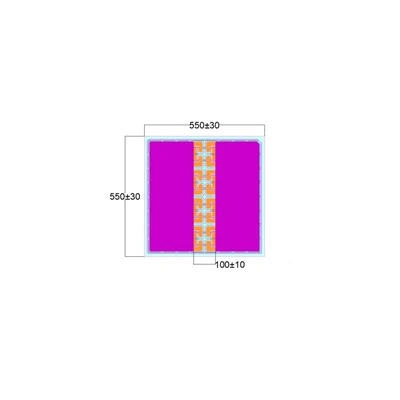
First, let’s get one critical definition out of the way: when we talk about a detector module, we’re not talking about the entire experiment. A module is a self-contained, functional unit that does one core job for the bigger system—whether that’s measuring the energy of a particle that hits it, capturing X-rays to form a medical scan, or counting muons from cosmic rays. Think of it like a single pixel in a giant camera, but a pixel that can measure individual particles, not just light. That self-containment is key to its weight: every part of that unit contributes to the total, and every part serves a purpose.
The biggest factor that determines a detector module’s weight is its core technology. This is where the vast majority of our conversations with customers start, and where the weight can swing wildly. Let’s walk through the most common types we supply, with real numbers pulled from the modules we’ve shipped in the last two years.
Take silicon pixel detectors, for example. These are the workhorses of high-energy physics experiments—they’re super precise, can track particles with micron-level accuracy, and are lightweight by detector standards. A standard 500-micron thick silicon sensor (that’s thinner than a sheet of paper) paired with readout electronics, a tiny cooling fan (silicon needs to stay cool to avoid noise), and a thin ceramic substrate might weigh around 15 to 25 grams. Wait, that’s less than a AA battery? But hold on—those are for small modules used in compact setups. If you’re building a larger silicon tracker for a collider upgrade, a module that’s 10 times bigger, with thicker readout layers and a slightly bulkier cooling system, can jump to 100 to 150 grams per module. That still sounds light, but when you have 100,000 of these modules lining a detector’s beam pipe, the total adds up to tens of tons for the full system.
Next up, gas electron multiplier (GEM) detectors, which are often used for large-area tracking in nuclear physics or environmental monitoring. GEM modules are a bit heavier because they rely on a fill gas (usually argon or CO2) sealed inside a thin plastic and gas-tight chamber. A 10×10 cm GEM module we shipped last quarter weighed 120 grams—most of that weight came from the aluminum frame holding the gas chamber and the thin copper readout strips. Scale that up to a 1×1 meter GEM module for a next-gen neutrino experiment, and you’re looking at 2.5 to 3 kilograms. That’s a big jump, but necessary for the gas seal and structural integrity that keeps the detector working for years in harsh, radioactive environments.
Then there are the heavyweights: scintillator-based detector modules, used for everything from medical PET scans to cosmic ray observatories. Scintillators are materials that light up when a particle hits them, and they’re often paired with photomultiplier tubes (PMTs) to turn that light into an electrical signal. A small 2×2 cm plastic scintillator module for a hand-held radiation detector weighs around 40 grams. But a 50×50 cm module for a PET scanner’s ring can weigh 10 to 15 kilograms—most of that is the scintillator itself, which is dense and solid, plus the lead shielding needed to block background radiation and the thick casing to protect delicate PMTs from bumps or temperature changes. I once had a customer ask if we could make a 1-meter scintillator module for a cosmic ray telescope that was under 10 kg. We quoted them 22 kg, and when they saw that number, they immediately adjusted their design to use smaller modules, because they didn’t realize just how heavy dense scintillator material is.
Another big variable is the module’s required performance and environment. A module that’s meant to sit in a climate-controlled research lab can use lighter materials, like thin aluminum casings and minimal cooling, cutting weight by 10 to 15%. But a module meant to be installed on a satellite, or in a mine 1,000 meters underground, needs way more support. For a satellite-borne detector module, you have to account for radiation hardening (materials that can survive space radiation, which are thicker and heavier than standard electronics), vibration resistance for launch, and thermal regulation to keep the module from overheating in the vacuum of space. I worked on a satellite detector project a few years back where the customer initially wanted a module under 50 grams for their payload. The final module weighed 112 grams—half of that was just the radiation-shielded casing, something they didn’t account for in their initial calculations. For underground detectors, the opposite is true: you need heavy shielding to block background radiation from rock, so a module that might weigh 5 kg in the lab jumps to 12 kg once you add the lead or copper shielding.
Don’t forget about the small, often overlooked components that add up. I’ve had customers send us their own “weight breakdown” that only included the sensor and readout chip, forgetting about the connectors, cables, mounting brackets, and calibration sources that every module needs. A micro coaxial cable for signal transmission might weigh 2 grams, a small mounting bracket 5 grams, and a tiny radioactive calibration source (used to make sure the detector is measuring correctly) another 3 grams. On a small module, that might not seem like much, but on a 100-module array, that’s 1 kg of extra weight that wasn’t in the original design. We always include a full, line-item weight breakdown in our quotes now, because we’ve seen too many projects run over weight budgets because of these small misses.
Now, let’s talk about real-world examples of how this plays out, from projects I’ve been directly involved with. In 2021, we supplied 1,200 silicon tracker modules for an upgrade to a medium-energy nuclear physics experiment. Each module was 8×8 cm, with a silicon sensor, digital readout chip, and integrated cooling. The average module weight was 128 grams—exactly what we quoted, and the total weight for all modules was 153.6 kg, which fit perfectly into the experiment’s revised mounting system. A year later, we worked with a medical device startup building a portable SPECT scanner (used for cardiac imaging) that needed lightweight modules to keep the device under 5 kg total for hand-held use. We supplied small scintillator modules with custom lightweight magnesium casings (instead of standard aluminum) and ultra-thin PMTs, bringing each module down to 32 grams, so the full array of 16 modules weighed just 512 grams—way under the customer’s goal. On the flip side, a large-scale neutrino experiment we quoted in 2022 needed 50,000 GEM modules for a 4×4 meter tracking plane. The customer had initially estimated each module at 50 grams; our detailed breakdown, accounting for gas seals, readout strips, and structural frames, put each at 2.8 kg. That meant the full plane would weigh 140 tons—not the 2.5 tons they’d planned for. They went back to the drawing board, designing smaller, lighter modules with gas mixtures that needed less structural support, and settled on a final module weight of 90 grams. That’s the kind of impact getting the weight right has on a project.
So, what does this all mean if you’re someone looking for a detector module? First, don’t ask for a “one-size-fits-all” weight. The right weight depends on four core factors: the technology of the module, its required performance, the environment it will operate in, and any constraints like size, portability, or radiation shielding. Second, work with a supplier that doesn’t just pull a number out of thin air. Good suppliers will ask you specific questions: what is the module’s function? Where will it be used? What’s your weight budget? Are there size constraints? Do you need shielding or radiation hardening? At our company, we build a custom weight breakdown for every module we design, and we always flag potential gaps or surprises before you sign on—no hidden costs, no last-minute redesigns.
I’ve been in this industry long enough to know that weight is more than just a number on a spec sheet. For a satellite, too much extra weight means higher launch costs, or even scrapping a payload. For a medical device, heavy modules mean a scanner that’s too big and bulky for clinics to use. For a physics experiment, too much weight puts stress on delicate components that need to stay aligned to within microns to work. That’s why taking the time to get the detector module’s weight right from the start is one of the most important decisions you’ll make for your project.
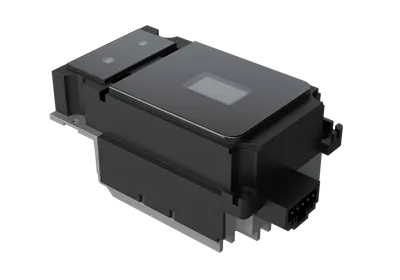
If you’re in the market for a detector module, or you’re working on a project and want to verify your current design’s weight, reach out to us to discuss your needs. We can review your requirements, provide a detailed, accurate weight breakdown, and offer custom solutions to fit your budget and constraints. Don’t let a miscalculated weight derail your project before it even starts.
System References
- Grupen, C., & Shwartz, B. (2008). Particle Detectors (2nd ed.). Cambridge University Press.
- Klanner, R. (2015). Silicon Detectors for High-Energy Physics. Annual Review of Nuclear and Particle Science, 65, 31–52.
- Sauli, F. (2014). Gaseous Radiation Detectors: Fundamentals and Applications. Cambridge University Press.
- Leo, W. R. (1994). Techniques for Nuclear and Particle Physics Experiments: A How-To Approach (2nd ed.). Springer-Verlag.
- International Organization for Standardization. (2019). Medical Electrical Equipment – Part 2-34: Particular Requirements for the Safety of Nuclear Medicine Equipment. ISO 10993-1:2019.
UVLEDTEK Group
As one of the most professional detector module manufacturers and suppliers in China, our products have good reputation in the market. Please rest assured to buy high quality detector module at competitive price from our factory. For more information, contact us now.
Address: Huangshi Industrial Zone, Putian City, Fujian Province, China
E-mail: info@uvledtek.com
WebSite: https://www.uvledtek.com/
