If you’re shopping for bearings, chances are you’ve stumbled on deep groove ball bearings (DGBBs) and spherical roller bearings (SRBs) — two of the most common types out there. As someone who’s been supplying deep groove ball bearings for over a decade, I’ve talked to dozens of engineers, factory managers, and small business owners who mix these two up all the time. It’s easy to do, since both are designed to reduce friction between rotating parts, but they’re built for totally different jobs. Let me break this down straight, no industry jargon that makes your eyes glaze over. Deep Groove Ball Bearings
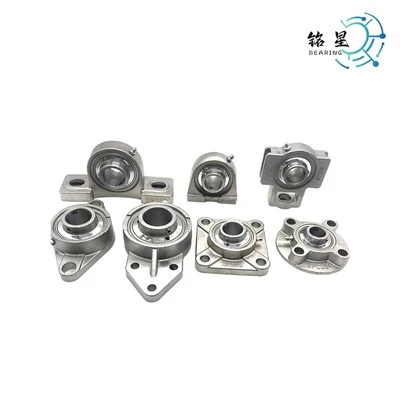
First, let’s start with the basics. Deep groove ball bearings are the Swiss Army knives of bearings. They’re simple in design — basically two rings, a set of smooth balls, and a cage to keep the balls spaced evenly. Most are made from chrome steel, and they can handle both radial loads (the force pushing outward from the shaft, like a wheel bearing on a car) and small amounts of axial load (the force pushing along the shaft, like when you push a drill bit into wood). I’ve seen them used in everything from electric motors and conveyor belts to small appliances like blenders and washing machines. The average DGBB I supply runs smooth, quiet, and doesn’t cost an arm and a ticket. That’s not to say they’re perfect — their weak spot is misalignment. If the shaft tilts even a little, the balls don’t line up right, and friction goes up fast.
Now spherical roller bearings. These look way different at first glance. Instead of round balls, they use barrel-shaped rollers, and the outer ring has a spherical (dome-shaped) raceway. That’s the key difference. SRBs are built for heavy loads and big misalignment. Think of a mining conveyor that stretches hundreds of feet, where the shaft might bend a little under the weight, or a wind turbine blade that shifts as it spins. SRBs can handle way more radial load than DGBBs, and they can compensate for shaft misalignment or shaft deflection — even up to 3 degrees of misalignment, which is a lot. I’ve heard of people using SRBs in heavy construction equipment, paper mills, and large agricultural machinery. But here’s the catch: they’re bulkier, heavier, and way more expensive than DGBBs. They also aren’t great at handling axial loads on their own — they rely on the rollers’ shape for radial strength, so too much axial force will mess them up.
Let’s get into real-world scenarios, since that’s what matters most when you’re picking a bearing. Last year, a client who runs a line of small food processing machines came to me upset. They’d been using SRBs in their 1HP electric motors, and they were blowing out every 6 months. When I looked at the setup, the motor only had a 1-inch shaft, so the load was tiny — way too small for an SRB. The SRB was overkill: it was big, heavy, and the extra complexity was causing unnecessary friction and heat. Swapping it for a standard DGBB cut their replacement cost by 70% and doubled the lifespan of the bearing. On the flip side, another client runs a 500-foot mining conveyor. They tried DGBBs last quarter, and within 2 weeks, half the bearings were locked up. The conveyor’s shaft was bending under the weight of the coal, and the misalignment was way more than a DGBB can handle. Swapping to SRBs fixed the problem, even though the bearings cost 5x more upfront.
Another big point is speed. DGBBs can run way faster than SRBs. The balls are smaller and lighter, so they spin with less inertia. A standard DGBB might top out at around 20,000 RPM, while most SRBs max out at 1,500 to 5,000 RPM. That’s why you’ll find DGBBs in high-speed stuff like centrifuges, turbo pumps, and the spindles on CNC machines. If you need a bearing that spins really fast, SRBs aren’t even an option — their rollers will flex and generate too much heat at high speeds, leading to premature failure.
Maintenance is another factor people overlook. DGBBs are super easy to maintain. You can lubricate them with standard grease, and if one goes bad, replacing it takes 10 minutes with basic tools. SRBs are a whole different story. Their complex design means you have to be careful not to damage the rollers when installing, and the seals are more prone to wear. I always tell clients to factor in maintenance time when picking a bearing — if you’re running a production line that can’t afford downtime, a DGBB is way simpler to swap out quickly.
Cost is probably the biggest decision-maker for most people. DGBBs are low-cost workhorses. A 6205 DGBB (a super common size) costs around $2 to $5, depending on quality. The equivalent size SRB is around $20 to $30. So if you’re running hundreds of bearings on a line, that adds up fast. I always say, don’t pay for a SRB if you don’t need its heavy-load, misalignment superpowers. But if your application has those needs, skimping on a DGBB will cost you way more in downtime and replacements down the line.
Wait, let’s talk about a common misconception. Some people think SRBs are just “better” because they handle heavy loads, but that’s not true. For example, if you’re building a bicycle wheel, you don’t need a SRB — a DGBB will handle the rider’s weight just fine, and it’s lighter, which matters for a bike. Using a SRB there would add unnecessary weight and cost, and you’d never notice a difference in performance. Conversely, if you’re building a forklift’s mast, a DGBB can’t handle the load of the forks lifting 5,000 pounds, so you need a SRB.
Another thing: sealing options. Most DGBBs come pre-sealed with rubber or steel shields, which makes them maintenance-free for most small applications. You just install them and forget about them. SRBs can have seals too, but because they’re bigger and have more moving parts, the seals are less effective at keeping out dirt and debris. If you’re working in a dusty or dirty environment, you might need extra seals or regular cleaning for SRBs, while DGBBs’ simple shields do a good enough job.
I get it, choosing the right bearing can feel overwhelming. When I first started supplying DGBBs, I once sold a SRB to a small factory that made sewing machines, and they sent it back a week later saying the machine was too slow and the bearing made a weird grinding noise. It turned out they had a 1,000 RPM motor, and the SRB wasn’t built for that speed. That mistake taught me to ask a lot more questions before recommending a bearing: what’s the load, how fast does it spin, is there any shaft misalignment, what’s the environment like?
Here’s the bottom line: DGBBs are your go-to for low-to-moderate radial loads, high speed, little to no shaft misalignment, and tight budgets. They’re reliable, easy to work with, and work for thousands of everyday applications. SRBs are for heavy industrial jobs where misalignment and high loads are a given — but you don’t want them in any application that can use a DGBB.
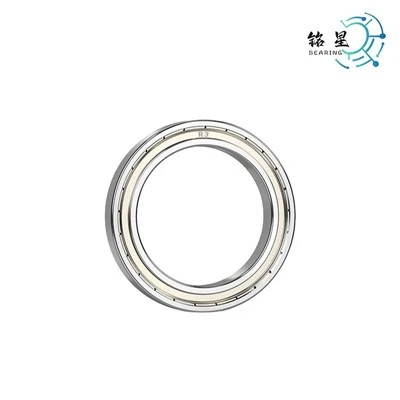
If you’re not sure which one you need, or you’re tired of dealing with bearings that keep failing, I’m here to help. We’ve been supplying high-quality deep groove ball bearings to factories, repair shops, and manufacturers for years, and we can help you pick the right bearing for your specific setup. Drop us a line to chat about your needs, and we’ll make sure you get a bearing that works — no overpaying for something you don’t need, no sacrificing performance for cost.
Insert Bearings References:
- American Bearing Manufacturers Association. (2022). Bearing Types and Applications Handbook.
- Shigley, J. E., Mischke, C. R., & Budynas, R. G. (2004). Mechanical Engineering Design (7th ed.). McGraw-Hill.
- SKF Group. (2021). Spherical Roller Bearing Technology and Application Guide.
- NTN Corporation. (2020). Deep Groove Ball Bearing Design and Performance Specifications.
Taizhou Mingxing Bearing Co., Ltd.
As one of the most experienced deep groove ball bearings manufacturers and suppliers in China, we warmly welcome you to wholesale durable deep groove ball bearings in stock here from our factory. All customized bearings are with high quality and competitive price. For quotation, contact us now.
Address: No.168 Tonghe East Road, Luotuo Subdistrict, Zhenhai District, Ningbo City, Zhejiang Province
E-mail: qpj16888@outlook.com
WebSite: https://www.mingxingbearing.com/
