If you’ve ever stood in a server room at 2 a.m., staring at blinking network lights that refuse to sync, or spent hours untangling a frayed underground cable that’s causing an entire industrial line to shut down, you know how frustrating an unaddressed cable fault can be. That’s where a cable fault tester comes in—and let me tell you, as someone who’s worked in the cable testing industry for nearly 15 years, it’s not just another piece of electronic gear you can pick up off a shelf. It’s the tool that turns hours of guesswork into minutes of accurate, actionable answers. Cable Fault Tester
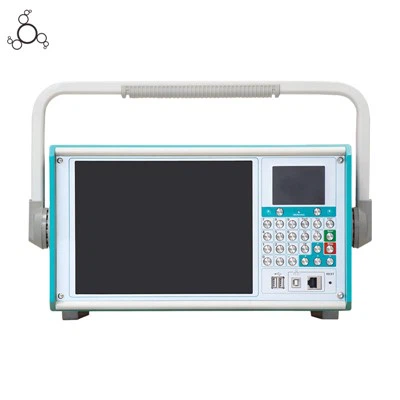
Let’s start with the basics. A cable fault tester is a specialized diagnostic instrument designed to locate and assess faults in electrical or communication cables. Unlike generic multimeters, which only measure voltage or continuity, these tools are built to handle the unique challenges of cables that run underground, through walls, or buried hundreds of feet underground. The most common faults we encounter are things like insulation breakdown, short circuits (when two conductors touch accidentally), open circuits (a broken wire that stops current flow), and high-resistance faults—those tricky, intermittent issues that only show up when the cable is under load.
I still remember my first week on the job back in 2009. A local power company had called in panicking: a 10-kilometer underground feeder cable was causing frequent outages, and their team had spent three days digging up half the utility corridor without finding the fault. We showed up with our portable time-domain reflectometry (TDR) cable fault tester, one of the most widely used models in our inventory, and in 12 minutes flat, we pinpointed the fault 476 meters from the entry point. Turns out, a backhoe operator had nicked the insulation during construction the month before, and the damage had only worsened when rain seeped in. That’s the magic of these tools—they don’t just tell you “something’s wrong”; they tell you exactly where, down to the meter.
Now, let’s break down how cable fault testers work, because understanding their core functionality helps explain why they’re non-negotiable for anyone who relies on cable infrastructure. The gold standard for most modern testers is time-domain reflectometry. Here’s the simple version: the tool sends a low-voltage, high-frequency pulse down the cable. When the pulse hits a fault, some of it bounces back to the tester’s sensor. The machine measures the time between sending the pulse and receiving the reflection, and uses that speed of signal travel through the specific cable type to calculate the fault’s distance from the test point. It’s similar to how sonar works for submarines, just scaled for cables.
Some testers also integrate additional features, like arc reflection technology, which is great for locating high-resistance faults that don’t respond to standard TDR pulses. Those intermittent issues—like a wire that only short-circuits when the temperature drops or the cable bends—are a nightmare for field teams, but arc reflection testers apply a small, controlled arc to the fault spot, making the reflection detectable to the main tester. For underground cables that don’t have a direct test point, many models also include a signal generator and line locator, so you can send a tone down the cable, then trace it with a handheld locator above ground to pinpoint the exact fault spot without digging up the entire route.
You might be wondering, why not just use a multimeter or a continuity tester for basic checks? Let’s be clear: multimeters are perfect for testing if a single conductor has continuity, but they can’t tell you where a fault is along a long cable. If you have a 5-kilometer fiber optic cable that’s broken 2 kilometers from one end, a multimeter will just say “no continuity” and leave you guessing. A cable fault tester, on the other hand, will show you a clear graph of the cable, with a sharp spike at the fault location, so you know exactly where to cut and splice.
This distinction is why our customers range from small electrical contractors maintaining residential wiring to large utility companies managing 100-kilometer transmission lines. Last year, we supplied a set of handheld cable fault testers to a coastal telecommunications company that was dealing with saltwater corrosion in subsea cables. Those saltwater faults are notoriously hard to locate because the insulation breaks down gradually, creating high-resistance spots that don’t show up on standard continuity tests. Our testers’ ability to measure impedance changes along the cable let them repair three faulty segments in a single day, instead of the three weeks they’d spent troubleshooting with older, less precise tools.
Another key feature to look for in a cable fault tester is portability and durability. Our field customers are often working in extreme conditions: snow, rain, dusty construction sites, or tight server room spaces. That’s why we design our models with rugged, IP-rated casings, long battery life, and large, easy-to-read displays that work in bright sunlight or low light. Some of our lighter, handheld testers weigh less than 2 kilograms, so a technician can carry them up ladders or along utility lines all day without fatigue. For larger, fixed test stations used in manufacturing or data center labs, we offer high-accuracy models that can test cables up to 50 kilometers long, with precision down to 0.1 meters.
It’s also important to note that cable fault testers aren’t just for power and data cables—they work for fiber optic cables too, though with a slightly different set of tools. Fiber optic cable fault testers, often called optical time-domain reflectometers (OTDRs), send light pulses instead of electrical signals, and they can locate breaks, splice losses, and attenuation issues in fiber strands. We’ve seen more and more demand for OTDRs lately as businesses expand their fiber networks, and we’ve adjusted our product line to include compact, budget-friendly OTDRs for small businesses, as well as high-end models for large-scale network deployments.
A common misconception I hear from new customers is that cable fault testers are too expensive for small operations. I get it—when you’re a one-person contracting business, every piece of equipment has to pull its weight. But let’s do the math: a single unplanned outage can cost a retail store, a factory, or a hospital thousands of dollars in lost revenue or emergency repairs. Our entry-level cable fault testers pay for themselves in one or two jobs where you’d otherwise have to hire a third-party diagnostic team at a premium rate. Plus, we offer flexible financing and rental options for customers who don’t need a tester every day, so you can access the right tool without a huge upfront cost.
Over the years, I’ve seen the cable testing industry evolve a lot. Early models were bulky, heavy, and only worked for specific cable types—power testers couldn’t handle fiber, and voice cable testers couldn’t handle high-voltage lines. Now, many modern testers are multi-functional: they can test coaxial, twisted pair, fiber, and low-voltage power cables all in one device. They also store test results, so you can log fault locations, compare readings over time, and generate reports for compliance or maintenance records. That’s a huge help for customers who need to document cable health for regulatory purposes or to plan future upgrades.
I want to be transparent, though—no cable fault tester is perfect. If a cable has a fault right at the end, or if the insulation is completely shattered, even the most advanced tester might have a hard time distinguishing between a fault and the cable’s termination. That’s why training is just as important as the tool itself. We offer free on-site training for all our customers, walking their technicians through how to interpret the tester’s graphs, adjust settings for different cable types, and avoid common mistakes—like testing a live cable (never a good idea) or using the wrong pulse length for a long vs. short cable. A great tool in the hands of an untrained technician is useless, and a basic tool in the hands of a trained pro will outperform a fancy tester used incorrectly.
Let’s circle back to that 2009 story I mentioned earlier. That power company didn’t just save time that day—they avoided a potential safety hazard. A frayed underground cable that’s left un-repaired can overheat, cause fires, or even pose an electrocution risk if someone accidentally disturbs it. Cable fault testers aren’t just about fixing outages; they’re about keeping people safe and ensuring critical infrastructure stays reliable. Whether it’s a small business’s office network, a hospital’s emergency power lines, or a city’s entire electrical grid, cable fault testers are the quiet workhorses that keep the power and data flowing when it matters most.

If you’re dealing with recurring cable issues, planning a network upgrade, or just want to add a reliable diagnostic tool to your toolkit, I’d encourage you to reach out to our team. We don’t just sell cable fault testers—we’ve been troubleshooting cable problems for decades, and we’re here to help you pick the right tool for your specific needs, whether that’s a portable handheld unit for field work or a high-precision tester for your lab. We’ll walk you through features, pricing, and training, so you can make an informed decision that works for your budget and your projects.
Tan Delta Tester References
- ASTM International. Standard Test Method for Location of Faults in Electric Cables by Time-Domain Reflectometry. 2018.
- The Institute of Electrical and Electronics Engineers. Guide for the Application of Cable Fault Locating Systems. IEEE Std 62-1995, 1995.
- Telecommunications Industry Association. Fiber Optic Cable Testing Standards for Commercial Networks. TIA-568-C.0, 2012.
Wuhan Jiuhua Jingce Power Equipment Co., Ltd.
As one of the most experienced cable fault tester manufacturers in China, we offer a wide range of products with superior quality. Please feel free to wholesale bulk durable cable fault tester from our factory. For price consultation, contact us.
Address: 601,Unit 1,Building D4-02,Optics Valley Center,303 OpticsValley Avenue,Wuhan
E-mail: market@wuhanjhjc.com
WebSite: https://www.powertransformertester.com/
