Over the years, the Veress needle has undergone a remarkable evolution, emerging as a cornerstone in the field of minimally invasive surgery, particularly laparoscopy. As a supplier deeply involved in the distribution of Veress needles, I have witnessed firsthand the various advancements and milestones that have shaped this essential medical tool. Veress Needle
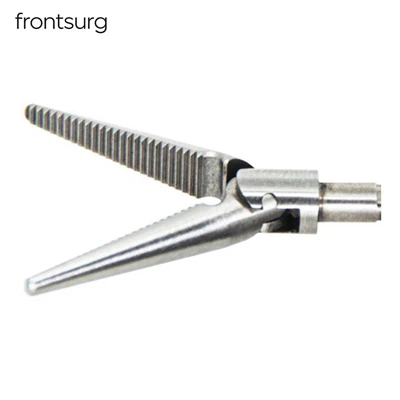
The Origins of the Veress Needle
The story of the Veress needle begins in the mid – 20th century. It was first introduced by Hungarian physician János Veress in 1938. At that time, laparoscopy was in its infancy, and there was a pressing need for a safe method to introduce gas into the abdominal cavity to create a working space for laparoscopic procedures. The original Veress needle was a simple design, featuring a sharp, hollow needle with a spring – loaded stylet. When the needle was inserted into the abdomen, the stylet would retract upon contact with tissue, protecting the internal organs from direct puncture. Once the needle reached the abdominal cavity, the gas could be safely introduced through the hollow needle.
These early Veress needles were primarily made of stainless steel, a material that was readily available and had good mechanical properties. However, they were relatively basic in design, with limited features to prevent complications such as accidental puncture of blood vessels or organs. The spring – loaded mechanism was often not as precise as modern versions, and the needles were usually of a fixed length and gauge, which made them less adaptable to different patient anatomies and surgical requirements.
Advancements in Design
As laparoscopic surgery became more popular in the 1970s and 1980s, there was a growing demand for improvements in Veress needle design. One of the significant advancements was the development of better – engineered spring – loaded mechanisms. These new mechanisms provided more consistent and reliable retraction of the stylet, reducing the risk of inadvertent injuries during insertion.
The introduction of different needle gauges and lengths was another important development. Surgeons now had the option to choose a Veress needle that was most suitable for the patient’s body habitus and the specific laparoscopic procedure. Thinner needles were used for patients with smaller body frames or for less invasive procedures, while thicker needles could be used when larger volumes of gas needed to be introduced quickly.
In addition to variations in size, the tip design of Veress needles also evolved. The original sharp tip was modified to be more blunt or rounded, which further reduced the risk of organ perforation. Some manufacturers also incorporated safety features such as a sheath that covered the needle tip until it was safely inside the abdominal cavity, adding an extra layer of protection.
Technological Innovations
In recent decades, technology has played a significant role in the evolution of the Veress needle. One of the most notable technological advancements is the incorporation of sensors. Some modern Veress needles are equipped with pressure sensors that can provide real – time feedback on the pressure inside the abdominal cavity during gas insufflation. This helps surgeons to monitor the procedure and ensure that the pressure remains within a safe range, reducing the risk of complications such as pneumothorax or excessive intra – abdominal pressure.
Another technological innovation is the use of imaging technology. Some Veress needles are designed to be used in conjunction with imaging systems such as ultrasound. This allows surgeons to visualize the needle tip in real – time as it is being inserted into the abdomen, increasing the accuracy and safety of the procedure. Ultrasound – guided Veress needle insertion is particularly useful in patients with complex abdominal anatomy or in cases where there is a higher risk of injury.
Material Improvements
Materials science has also contributed to the development of the Veress needle. While stainless steel remains a popular choice due to its durability and corrosion resistance, new materials are being explored. For example, some Veress needles are now made with polymers or composite materials. These materials can offer advantages such as being more flexible, which may reduce the risk of tissue damage during insertion. They can also be designed to be more radiolucent, which is beneficial when the needle is used in procedures that involve imaging techniques.
Furthermore, surface coatings have been applied to Veress needles to improve their performance. Hydrophilic coatings can reduce friction during insertion, making the needle slide more smoothly through the tissue. Antibacterial coatings can help to prevent infections, a crucial consideration in surgical procedures.
Clinical Importance of the Evolving Veress Needle
The evolution of the Veress needle has had a profound impact on clinical practice. The improved safety features have reduced the incidence of complications associated with laparoscopic entry. In the past, accidental puncture of major blood vessels or organs was a significant concern during Veress needle insertion, which could lead to serious bleeding, organ damage, or even death. However, with the advancements in design and technology, the risk of such complications has been significantly reduced.
The increased precision and adaptability of modern Veress needles have also made laparoscopic procedures more accessible. Surgeons can now perform procedures with greater confidence, even in patients with challenging anatomies. This has led to the widespread adoption of laparoscopic surgery as a preferred method for many abdominal operations, offering patients shorter hospital stays, less pain, and faster recovery times compared to traditional open surgery.
Future Trends
Looking to the future, the Veress needle is likely to continue to evolve. We can expect to see further integration of advanced technologies, such as artificial intelligence and robotics. For example, AI – assisted guidance systems could analyze real – time data from the sensors in the Veress needle to provide more accurate insertion guidance. Robotics could be used to perform the needle insertion with even greater precision, especially in cases where high – precision is required.
There may also be more focus on personalized medicine in the context of Veress needle design. With the increasing availability of patient – specific anatomical data, Veress needles could be customized to suit the individual patient’s needs, taking into account factors such as body size, tissue characteristics, and previous surgical history.
As a Supplier
As a supplier of Veress needles, we are committed to providing our customers with the latest and most advanced products on the market. We work closely with manufacturers to ensure that our Veress needles meet the highest standards of quality and safety. We understand the importance of these medical devices in laparoscopic surgery and strive to offer a diverse range of products to meet the different needs of surgeons and patients.
Whether you are a large hospital system looking to upgrade your laparoscopic equipment or a private practice surgeon in need of reliable Veress needles, we have the expertise and the product range to serve you. We are dedicated to providing excellent customer service, including prompt delivery, after – sales support, and technical advice.
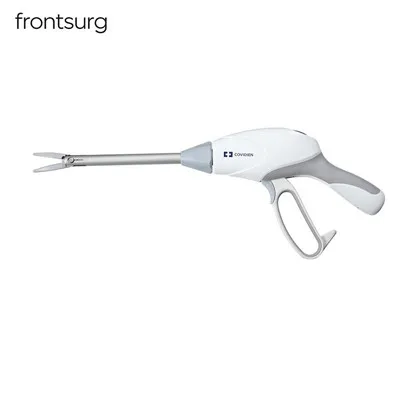
Laparoscopic Handle If you are interested in learning more about our Veress needles or would like to discuss your procurement needs, we encourage you to reach out to us. We look forward to the opportunity to work with you and contribute to the success of your laparoscopic procedures.
References
- Veress, J. (1938). Einige Ergebnisse der endoptischen Blasenbetrachtung. Zeitschrift für Urologie, 32(8), 381 – 386.
- Cuschieri, A. (1991). Laparoscopic cholecystectomy: early experience of 200 cases. BMJ, 302(6779), 678 – 681.
- Lim, S. C., & Abu – Hilal, M. (2009). Laparoscopic entry techniques. Surgical Endoscopy, 23(6), 1227 – 1235.
- Singh, A., & Hemal, A. K. (2017). Safety of the Veress needle insertion in laparoscopy: A review. Journal of Minimal Access Surgery, 13(3), 161 – 166.
Frontmed (Hangzhou) Trading Co., Ltd.
Frontmed (Hangzhou) Trading Co., Ltd. is one of the most experienced veress needle manufacturers and suppliers in China, also supports custom service. Please rest assured to wholesale high quality veress needle made in China here from our factory. Contact us for more details.
Address: Room 406, Building 6, No.1688 Chunjiang East Rd, Tonglu, 311500, Hangzhou
E-mail: alex@frontsurg.com
WebSite: https://www.frontsurg.com/
