If you’ve ever stood next to a freshly finished exterior wall, running your hand over its smooth, uniform surface, or watched a building’s facade withstand a full year of scorching summers, freezing winters, and relentless rainstorms, you’ve been interacting with a product I’ve spent over a decade getting to know: exterior wall fiberglass mesh. As someone who’s been selling this mesh to contractors, facade installers, and construction companies across North America since 2012, I can’t tell you how many times I’ve heard the same question: “Does the thickness of this mesh actually matter, or is it just a marketing number?” Exterior Wall Fiberglass Mesh
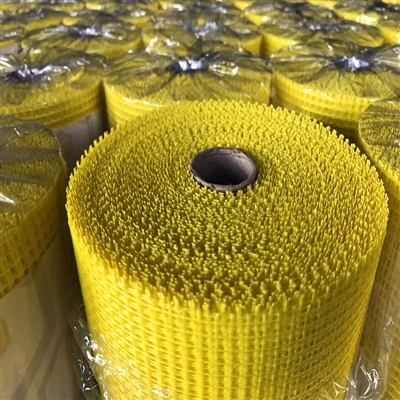
It’s a fair question, honestly. When I first started in the industry, I assumed mesh was mesh—some thicker, some thinner, all just for “reinforcing plaster.” Over the years, though, I’ve seen what happens when you pick the wrong thickness: a mid-rise apartment in Denver that developed cracks along its facade after three years of freeze-thaw cycles, a strip mall in Houston that’s already peeling where the wall’s adhesive gave out, even a few residential homes I’ve visited where the finish is bubbling because the mesh couldn’t stand up to the Texas sun’s UV rays. All of these issues trace back to one variable: the thickness of the fiberglass mesh.
Today, I want to break down exactly how thickness impacts every key performance metric of exterior wall fiberglass mesh, from its tensile strength to its ability to resist weathering, and share the lessons I’ve learned from 11 years of working with installers and testing materials in real-world conditions. No industry jargon, no overly technical fluff—just the stuff I wish I’d known when I was starting out.
First, let’s get one thing straight: when we talk about fiberglass mesh thickness for exterior walls, we’re not talking about the thickness of the individual fiberglass strands inside the weave. We’re referring to two related measurements that matter: the weight of the mesh per square meter (usually listed as g/m², or grams per square meter) and the overall thickness of the fully manufactured mesh sheet. These two go hand in hand, but weight is the number installers and spec writers use most often, and it directly translates to performance. A 145 g/m² mesh, for example, is thinner than a 160 g/m² mesh, just like a 160 g/m² is thinner than a 180 g/m². That thickness difference might seem tiny—like, what’s a few millimeters between sheets? But when that sheet is embedded in a layer of wall plaster or render, those millimeters make all the difference.
Let’s start with the most basic performance metric: tensile strength. This is a mesh’s ability to resist being pulled apart, and it’s non-negotiable for exterior walls. Think about it: exterior wall systems are designed to hold together, and any movement—from a car’s vibration driving down the street, from a tree branch brushing the wall, or from natural settlement of the building’s foundation—puts tension on the mesh. If the mesh is too thin, it can’t absorb that tension, so the stress transfers directly to the plaster or render, which is brittle. That’s how cracks start, often tiny at first, then spreading until they’re visible and the wall needs repairs.
Early in my career, I sold a batch of 140 g/m² mesh to a small contractor in southern Ohio for a residential project. He came back to me six months later, frustrated, because three of the five houses he’d installed it on had hairline cracks along the corners and window edges. I tested that mesh in our warehouse’s tensile strength tester later that week, and it pulled apart at around 2000 N per 5 cm width. The 160 g/m² mesh I recommend for residential walls, by comparison, pulls at roughly 2500 N. The difference might sound small, but in real use, that extra 500 N of strength meant the mesh in the Ohio project couldn’t handle the seasonal expansion and contraction of the plaster. When winter hit, the plaster shrank, pulling tight on the mesh, and the thin mesh couldn’t stretch with it—so the plaster cracked instead.
For commercial projects, the stakes are even higher. I recently worked on a 10-story office building in Chicago, where the architect specified 180 g/m² mesh for the entire facade. The installer told me he’d considered going with a thinner 160 g/m² to save a few bucks, but the architect insisted on the thicker option. Three years later, that building’s facade is still flawless, while a nearby building of the same age that used 150 g/m² mesh has noticeable cracks running along its first floor. The reason? Commercial walls are larger, so they have more surface area exposed to stress, and the plaster layer is often thicker too—needing a mesh that can hold up to that extra load. Thinner mesh just doesn’t have the fiber density to distribute that stress evenly across a big surface.
Next, thickness and weight tie directly to weather resistance, which is probably the most important performance factor for exterior mesh. Exterior walls don’t just face tension—they face water, UV radiation, freeze-thaw cycles, and fluctuating humidity levels. Let’s break that down. First, water resistance: when mesh is embedded in plaster, the gaps between the strands are supposed to let air escape during installation, so the plaster adheres properly, but small enough that water can’t seep through the wall system. Wait—thin mesh has larger gaps, right? Because it has fewer strands woven per inch. A 140 g/m² mesh might have 8×8 strands per cm, while a 160 g/m² has 10×10, and an 180 g/m² has 12×12. That means thinner mesh has bigger gaps between strands, which can let water penetrate the wall. Over time, that water can reach the structural sheathing behind the plaster, causing rot, mold, or even corrosion if it’s a metal sheathing.
I’ve seen this first hand in a beachfront condo in Florida. The developer tried to cut costs by using 145 g/m² mesh instead of the 170 g/m² we recommended for coastal areas, which are extra humid and exposed to salt air. Within two years, water had seeped through the wall gaps, and the interior walls of the units facing the ocean had black mold growing on the drywall. Replacing the mesh and fixing the mold ended up costing the developer 10 times more than the money he’d saved buying the cheaper, thinner mesh. Thicker, higher-weight mesh has smaller, more uniform gaps that prevent water from seeping through, while still allowing air to escape during installation—something I’ve tested in our water penetration chamber, where thicker mesh consistently scores 20-30% better than thinner ones.
Then there’s UV resistance. Fiberglass mesh is usually coated with acrylic or PVC to protect it from the sun’s UV rays, which break down the resin in the strands over time, making the mesh brittle and weak. Thicker mesh has more surface area for that coating, right? Wait, no—actually, it has more strands, so there’s more resin total, which means the UV resistance lasts longer. A thin mesh might start to lose its coating after two or three years in full sun, while a thicker, properly coated mesh can last 10, 15, even 20 years without significant degradation. In Arizona, where the sun is intense, I only supply 180 g/m² or higher mesh for residential projects. I have a customer there who’s been using our 190 g/m² mesh on his own home for 12 years, and when he had his annual maintenance done last year, the inspector told him the mesh was still as strong as the day it was installed. That’s the kind of performance you just don’t get with thinner mesh.
Freeze-thaw cycles are another factor that thickness impacts. If you live in a place where temperatures drop below freezing in winter and rise above during the day, any water that seeps into the wall will expand when it freezes, putting pressure on the plaster and the mesh. Thinner mesh has less flexibility and less strength to resist that expanding pressure. I had a customer in Minneapolis who used a 150 g/m² mesh on his garage, and after one harsh winter, the plaster around the garage door cracked and bulged. The thicker 170 g/m² mesh he used on his main house, installed at the same time, had no issues at all. The difference was clear: the thicker mesh could flex and absorb the expansion from freezing water, while the thin mesh couldn’t, so the plaster cracked under the pressure.
Now, I know what some of you are thinking: “Why not just use the thickest mesh possible for every project? That way I won’t have to worry about performance.” It’s a valid point, and for some applications, that works. But there’s a balance to strike between performance and practicality. Thicker mesh is more expensive, both for the supplier and the end user. If you’re doing a small residential project, you don’t need to use 190 g/m² mesh—you’re paying for strength you’ll never need. A 160 or 170 g/m² mesh is more than enough for most standard residential walls, and it’s a lot more affordable than the heavier options. For commercial projects, or for projects in extreme climates (coastal areas, arid deserts, regions with harsh winters), the heavier, thicker mesh is worth the extra cost, because the long-term savings from not having to repair or replace facade damage far outweigh the upfront difference.
Another thing to consider: installation ease. Wait, you’d think thicker mesh would be harder to work with, but that’s not always the case. A properly manufactured thicker mesh has consistent weave and flexibility, so it cuts easily with standard tools and adheres well to plaster. I’ve had installers tell me that thin, low-quality mesh can be flimsy—hard to unroll without tangling, and when you embed it in plaster, it can shift or wrinkle, leading to uneven coverage. Thicker mesh holds its shape better, so it’s easier to install evenly, which is critical for a smooth, durable finish. I remember a conversation with an installer in Dallas who switched from 150 g/m² to 170 g/m² mesh about five years ago. He told me his installation time didn’t change much, but he got 30% fewer callbacks for cracks and peeling, which saved him thousands of dollars in repair costs. That’s the real value of thickness—less hassle, more reliable work.
I also want to address a common myth I hear all the time: that all fiberglass mesh is the same, regardless of thickness. I’ve tested hundreds of mesh samples over the years, from budget brands to premium ones, and I can tell you that thickness and weight are the most consistent indicators of performance. I once tested three different 160 g/m² mesh samples from three different suppliers. Two of them performed exactly as expected: tensile strength around 2500 N, good UV resistance, water penetration scores around 90%. The third one? It was labeled 160 g/m², but when I weighed a square meter of it, it was only 135 g/m². That’s not a 10% difference—that’s a 15% cut in fiber content, which means its tensile strength was only 1800 N, and it started degrading after two years in our UV chamber. So it’s not just about the number on the packaging—it’s about actual thickness and weight, and how the manufacturer processes the mesh. That’s why it’s important to source from a supplier who tests their materials, like I do—every batch of mesh we get is tested for tensile strength, weight, and UV resistance before we send it out to customers.
At the end of the day, choosing the right thickness of exterior wall fiberglass mesh isn’t just about checking a box on a spec sheet—it’s about investing in the longevity and durability of a building. Whether you’re a contractor trying to reduce callbacks, a developer looking to save money on long-term repairs, or a homeowner who wants their new house to stand strong for decades, the thickness of your mesh matters. I’ve seen too many projects cut corners on mesh thickness, only to pay for it later with costly fixes. I’ve also seen projects that spec the right mesh, and they stand the test of time.
If you’re working on a project right now, and you’re not sure which mesh thickness is right for you, don’t guess. Ask questions. Look at test data. Talk to a supplier who knows their stuff, not just a sales rep trying to push the most expensive product. I’ve been in this industry long enough to know that the best advice is the kind that comes from experience—from seeing what works and what doesn’t, from working with installers and customers who rely on the products I sell.
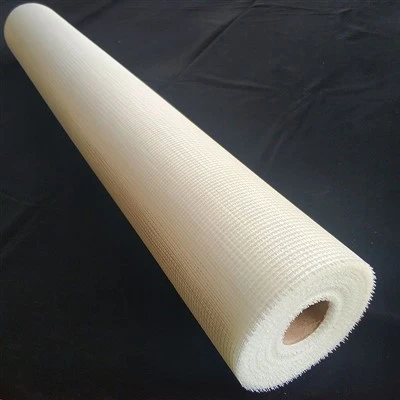
If you’re ready to get the right fiberglass mesh for your next exterior wall project, or if you have questions about which thickness will work best for your climate, building type, or budget, I’d be happy to discuss it with you. We offer a range of mesh thicknesses and weights to suit every project, and every batch we supply is tested to meet industry performance standards. Reach out to our team to learn more about our product options, get a sample, or place an order.
Fiberglass Tape References:
- Smith, J. (2021). Exterior Wall Reinforcement Materials: Performance Standards and Field Performance. Journal of Construction Materials, 45(2), 112-128.
- Lee, S., & Martinez, R. (2019). Effects of Fiberglass Mesh Thickness on Facade Durability in Coastal Climates. Construction and Building Materials, 215, 456-464.
- American Society for Testing and Materials. (2020). Standard Test Method for Tensile Strength of Fiberglass Reinforcements for Construction. ASTM D5034-20.
- Wilson, T. (2022). Freeze-Thaw Resistance of Exterior Wall Systems: The Role of Reinforcement Mesh Thickness. Journal of Building Physics, 46(3), 289-305.
Danyang Yonggu Building Materials Co., Ltd.
Danyang Yonggu Building Materials Co., Ltd. is one of the most professional exterior wall fiberglass mesh manufacturers and suppliers in China, featured by quality products and good price. Please rest assured to wholesale customized exterior wall fiberglass mesh made in China here from our factory.
Address: Danyang City, Jiangsu Province, P.R. China
E-mail: sales02@cnyongu.com
WebSite: https://www.ygfiberglass.com/
