If you’ve ever stood in front of a Turn Mill Center—a machine that lets you mill and turn parts on the same tool path, cutting setup time in half and boosting throughput by 30-50% for mid-to-high volume runs—you know that choosing the wrong cutting tool will turn that efficiency into a costly headache. As a supplier who’s worked with shops from small jobbing operations to large aerospace contract manufacturers for the past 12 years, I’ve seen teams waste tens of thousands of dollars on tools that either wear out too fast, chatter through critical tolerances, or just plain don’t fit the machine’s capabilities. Today I’m breaking down the step-by-step framework we use to help our customers pick tools that align with their Turn Mill Center, their part specs, and their bottom line. Turn Mill Center

Start with the basics, and that means not skipping the machine’s hard specs before you even look at a tool catalog. I can’t tell you how many times a shop has bought a 16mm solid carbide end mill, only to realize their Turn Mill Center’s B-axis spindle only has a 12mm tool shank capacity. Or worse, they’ve ordered a face mill with a 40mm arbor hole, and their machine’s tool holder taper is 30mm. The first thing we ask every customer is to pull their Turn Mill Center’s technical manual, grab a notebook, and jot down three non-negotiables: maximum tool length, shank diameter, and tool change time. Wait, tool change time? That’s not just a stat for the machine’s spec sheet—for shops running 24/7 lights-out operations, a tool that takes 12 seconds to swap versus 8 seconds adds up to 20 minutes of lost production per 1000 parts. That’s 10 extra parts a week, no extra labor, just from picking the right tool for the machine’s automatic tool changer (ATC) limits.
Next, meet the part. If you’re turning a 4140 steel shaft for a hydraulic valve, that’s a totally different request than milling a bracket from Inconel 718 for a jet engine. We walk customers through categorizing their part by material first, then by operation. Let’s break that down: for turning operations on a Turn Mill Center, the material’s machinability rating is non-negotiable. Free-machining steels like 12L14 are soft, so you can go with a coated carbide insert with a sharp edge, but for tough materials like duplex stainless steel, you need a tougher, more shock-resistant insert grade. For milling—whether face milling, slotting, or ramping—the same rule applies: aluminum is forgiving, so a high-helix coated carbide cutter works great, but graphite? You need a non-coated, diamond-tipped tool to avoid built-up edge (BUE) and keep part surface finish within Ra 0.8, which is standard for most automotive components.
Then there’s the operation type. Turning on a Turn Mill Center means you might be doing longitudinal turning, facing, profiling, or threading—each needs a different tool geometry. Threading a 10mm UNF thread requires a 60-degree V-shaped insert with a tight tolerance on the thread profile, whereas profiling a complex radius on a medical implant needs a general-purpose insert with a positive rake angle to reduce cutting forces. For milling, face milling is all about depth of cut (DoC) and surface finish, so a tool with a high number of inserts (or teeth) works great for finishing, while a coarse-pitch cutter is better for roughing, where you need to remove material fast without worrying about a perfect finish. Here’s a pro tip I learned early: for Turn Mill Centers that combine turning and milling on the same workpiece, always prioritize tools that can perform both operations if possible. A multi-functional insert that can turn a shoulder and mill a flat in one pass saves you from changing tools mid-job, cutting setup time by up to 40%.
Now, let’s talk about something that trips up even experienced machinists: chip control. Turn Mill Centers run at high spindle speeds and feed rates, and chips that don’t break properly will clog the tool, scratch the part, and even damage the machine. For long-chipping materials like stainless steel and titanium, you need inserts with a specially designed chipbreaker groove—usually a honed edge with a curved groove that breaks chips into small, manageable pieces that flush out with the coolant. For short-chipping materials like cast iron, you can get away with a simpler insert geometry, but even then, a chipbreaker helps prevent fine chips from getting stuck in the tool holder. We always test a sample cut for every new tool a customer is considering—run a 10mm long turn, collect the chips, and if they’re longer than 15mm and wrap around the tool, you need a different insert. I once worked with a small shop that was using a generic carbide insert for turning titanium shafts; their chips were coiled 2 feet long, and they spent 10 minutes every part clearing chips from the tool. We switched them to a TiN-coated insert with a stainless steel-specific chipbreaker, and their chip-related downtime dropped to 2 minutes per part.
Coolant and tool coatings are two more pieces of the puzzle that people often treat as afterthoughts, but they make a huge difference. For most Turn Mill Center operations, flood coolant works, but for high-speed machining of aluminum, high-pressure through-tool coolant (1000 PSI or higher) is essential—it flushes chips out of the cut and reduces heat buildup, which extends tool life by 20-30%. For coatings, let’s keep it simple: TiN is great for low-speed, low-demand operations, TiCN is better for medium-speed turning of steel, and TiAlN is the go-to for high-speed milling and machining of hard materials above 30 HRC. Diamond coatings are for non-ferrous metals and graphite, because ferrous metals react with diamond and cause rapid wear. We once had a customer try to use a TiAlN-coated end mill to machine a cast iron engine block; the coating wore off in 5 parts, and they were replacing tools every day. Switched to a TiCN coating, and tool life jumped to 25 parts, no issues.
Wait, don’t forget about tool geometry and edge prep. Positive rake angles reduce cutting forces, which is great for thin-walled parts that can deflect under pressure. Negative rake angles are stronger, better for roughing hard materials where you need to take deep cuts without chipping the insert. Edge prep is another big one: a sharp, honed edge (usually 0.02-0.05mm hone) works for finishing, but a heavy honed edge (0.1mm or more) is needed for roughing, especially in interrupted cuts—like when a mill cutter hits a part that’s not perfectly aligned. I learned this the hard way early in my career: a customer was running interrupted turning on a forged steel crankshaft, and their sharp-edge inserts were chipping after 20 parts. We switched them to a heavy-honed insert, and they got 150 parts per insert, no chipping.
Now, let’s talk about balancing cost and performance, because at the end of the day, it’s not just about picking the “best” tool—it’s about picking the right tool for your budget. A $50 solid carbide end mill will work for a small run of 10 aluminum brackets, but for a production run of 10,000, a $150 indexable milling cutter that has multiple inserts will cost 30% less per part, because you only replace the inserts, not the entire tool. Don’t fall into the trap of buying the cheapest tool on the market—generic inserts might save you money upfront, but their inconsistent quality leads to variable tool life, which means unplanned downtime and part rework that cost far more than the extra expense of a reliable tool. That said, don’t overspend on tools with features you don’t need. If you’re just running small batches of simple parts, a standard coated carbide insert will work fine—no need for a specialty grade that costs 2x more.
The final step is testing and iterating. No amount of catalog specs or manufacturer recommendations will tell you exactly how a tool will perform on your Turn Mill Center, your part material, and your specific operation. We always recommend that customers run a small test job—10-20 parts—with the tools they’re considering, and track key metrics: tool life per part, surface finish (use a profilometer if you have one, or even just a visual check under a microscope), cycle time per part, and any downtime related to tool changes, chip clogging, or tool wear. If tool life is shorter than expected, try a different insert grade or coating. If surface finish is rough, slow down the feed rate or switch to a tool with a higher number of teeth. I’ve had customers come back to us after testing a tool and say, “This is great for steel, but not for titanium”—so we adjust our recommendations for their future jobs.
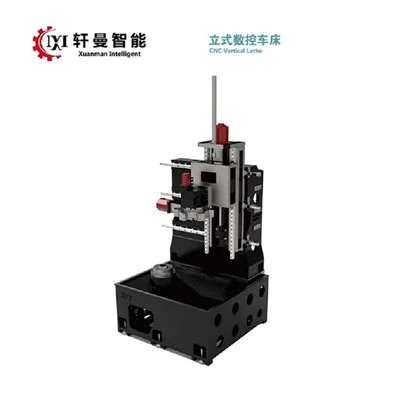
At the end of the day, selecting the right cutting tools for a Turn Mill Center isn’t about following a rigid set of rules—it’s about aligning the tool’s specs, geometry, and coatings with your machine’s capabilities, your part’s material and operation, and your production goals. Every shop is different: a high-volume automotive parts maker will prioritize tool life and cycle time above all else, while a job shop that runs small batches of custom parts will prioritize versatility and setup speed. If you’re looking to cut downtime, boost throughput, and get the most out of your Turn Mill Center’s capabilities, we’re here to help you sort through the options, test tools, and tailor a solution to your specific needs. Reach out to our team to discuss your next project, and we’ll walk you through every step to make sure you pick tools that work as hard as you do.
Turn Mill Center References
- Turn Machining: Principles and Applications. Society of Manufacturing Engineers, 2019.
- Cutting Tool Materials and Coatings for Modern Machining. ASM International, 2021.
- Chip Control in Turning and Milling Operations. Machining Science and Technology, Vol. 25, No. 3, 2020, pp. 412-435.
- Selection of Cutting Tools for Multi-Tasking Turn-Mill Centers. Journal of Manufacturing Processes, Vol. 67, 2021, pp. 189-202.
- High-Efficiency Machining with Indexable Tools. SME Tech Brief, 2022.
Jiangsu Xuanman Intelligent Equipment Co., Ltd.
As one of the most professional turn mill center manufacturers in China, we’re featured by quality products and low price. Please rest assured to buy discount turn mill center made in China here from our factory. Customized orders are welcome.
Address: No.1-1, Weier Road, Jieji Equipment Manufacturing Industrial Park, Sihong County, Suqian City, Jiangsu Province, China
E-mail: jsxmzn@163.com
WebSite: https://www.xm-machs.com/
