If you’ve ever stepped foot on a large-scale commercial project—think a 20-story hotel lobby, a 100,000-square-foot office tower, or a chain of 50 fast-casual restaurants across three states—you’ve probably noticed one of the most unforgiving tests a material can face: color consistency at scale. As a quartz slab supplier who’s spent 12 years troubleshooting this exact headache with architects, general contractors, and interior designers, I’m here to tell you the answer is not a straight “yes” or “no.” It’s a nuanced, messy dance between material science, manufacturing precision, and how well a team understands what quartz actually is under the surface. Quartz Slab
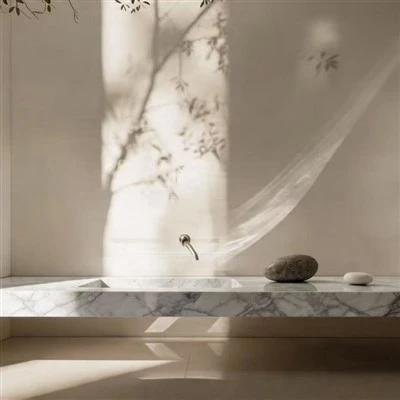
Let’s start with the most common myth I hear from first-time buyers: quartz is “man-made, so it should be perfectly uniform, right?” If only that were true. Quartz slabs aren’t poured like a cookie cutter batch of concrete or printed like a tile—they’re made from 90-95% natural quartz crystals, bonded with 5-10% polymer resins, pigments, and trace additives that give slabs their depth and variation. Those natural quartz crystals? They mined from different veins in granite quarries, pulled at different depths, and even from different sides of a mountain, each with tiny shifts in mineral density and inherent color undertones. That’s the baseline complexity right there—we’re not working with a blank slate of raw material; we’re working with millions of tiny, naturally occurring bits that each have a mind of their own.
I learned this the hard way early in my career. My very first big client was a boutique hotel in Austin, Texas, with a 12,000-square-foot lobby featuring a deep charcoal gray quartz slab with subtle, taupe veining. We did a small sample run for them, checked the color with a spectrophotometer that measures every wavelength of light, sent it over, and got the go-ahead. But when the first container of slabs arrived on-site, there was a noticeable difference: some slabs had too much blue undertone, others too much warm brown, and the veining was thicker in some pieces than in the sample. The contractor spent three days swapping slabs, and we had to remanufacture 20% of the order to make it work—costing us $18,000 in rework and pushing the project deadline by two weeks. That mistake taught me that matching color at scale isn’t just about making a pretty slab; it’s about controlling variables at every step of the process, and knowing where those variables can’t be controlled without compromising on quality.
So what does it actually take to get consistent color across 500, 1,000, or even 5,000 slabs for a project? Let’s break down the key factors, starting with the one we have the most control over: manufacturing batch consistency. Most quartz producers make slabs in “batches,” not individual pieces. A batch is a single mix of resin, pigments, and quartz crystals that’s processed in one go in our mixing and casting lines. The trick is making sure every slab in a batch is as identical to the next as possible. But even here, there’s a limit. Pigment settling is a big one—when we pour the wet mix onto the conveyor belt to set, heavier pigments can sink to the bottom of the slab, while lighter ones stay on top, creating a subtle color gradient from edge to edge. We combat this with high-shear mixing that agitates the mix for 45 minutes instead of 10, and we add vibration during the curing process to keep particles evenly suspended. But we can’t eliminate that gradient entirely— which is why we train our fabricators to orient slabs during installation, matching the top and bottom edges of each piece to avoid mismatched color streaks.
Then there’s the natural quartz component. When we source raw quartz crystals, we segregate them by “grade” and “color profile” before they even hit the mixer. For our most popular mid-range lines, we source crystals from a single quarry in Brazil that’s been mining the same vein for 18 years, so their color consistency is reliable. But for premium, custom lines where clients want more unique veining, we’ll mix in small amounts of quartz from a secondary quarry—only after running 20 test slabs and measuring their color with a delta E rating. Delta E is the industry standard for color difference; a delta E of less than 2 is invisible to the human eye, 2-5 is noticeable only at close range, and anything over 5 stands out from across a room. For large commercial projects, we target a delta E of less than 3 across every slab in the order, because that’s the sweet spot where it looks intentional, not mismatched.
Wait, intentional variation. That’s another concept most project teams get wrong. When a client wants “perfectly matching” quartz for a 10,000-square-foot project, they often mean no variation at all. But quartz’s beauty comes from subtle, random veining and color shifts—too little variation and it looks like a cheap, uniform laminate. The key is to define what “matching” actually means before you place an order. Early in my career, I worked on a project in Denver where the design team insisted on zero color variation, so we had to make a custom batch of solid, non-veined white quartz with delta E less than 1.5. The problem? Solid white quartz doesn’t hold up well to UV light—after six months, slabs on the south-facing exterior walls had yellowed slightly. We ended up having to source a UV-stabilized resin formula, and even then, we had to install an additional clear topcoat to prevent fading. That project taught me that color matching at scale also has to account for installation conditions and long-term performance. If your project has direct sunlight, a light-colored slab with very subtle undertones will look different than a dark slab that absorbs light. If it’s a kitchen with heavy use, a stain-resistant pigment might have a slightly different hue than a standard one.
Now, what are the common pitfalls that make color matching so tricky for large projects? Let’s start with rushing the sample phase. I can’t tell you how many times a designer will show me a phone photo of a slab they saw at a trade show and say, “we just need 100 of these.” Phone screens and showroom lighting are inconsistent—trade shows use warm, bright LED lights that make taupe look like gray, and a phone photo might have a blue tint from the camera’s auto-adjust. The best practice is to have the supplier send a 2×2 foot full-size slab sample under your project’s actual lighting conditions. If your project is a hospital with cool fluorescent lighting, don’t sample under warm showroom lights. That’s a mistake we see all the time, and it leads to 30% of on-site color complaints.
Another pitfall is ordering in separate shipments. For example, a client will order 500 slabs for a mall project in one order, but ask to split the shipment into two parts to fit their construction timeline. That’s a red flag. Each time we run a new batch, even with the same formula, there’s a tiny shift in color—sometimes as little as a delta E of 0.8, but enough to be noticeable when you’re standing in a corridor lined with slabs. We always advise clients to order their full required quantity in one single batch, and to ask us to hold extra slabs on hand for 12 months in case of damage or additional work. That way, if you need to replace a slab two years in, it will match the existing ones.
Wait, but what about when a project is already underway and you need to source more slabs? We get that call at least once a month. Last year, a restaurant chain in Florida called us three months before opening and realized they were 12 slabs short for their bar tops. We pulled 12 slabs from our stock that were made from the same batch as their original order, tested their delta E, and matched them perfectly. But if we didn’t have stock, that would have been a problem. If we had to run a new batch, the color would be off, and the restaurant would have to delay opening. That’s why we recommend that for any project over 5,000 square feet, you order a 10% overage when you place your initial order. It might feel like a waste of money upfront, but it’s way cheaper than rework or delayed openings.
Is there a way to guarantee perfect color matching for every large-scale quartz project? No. But you can get as close as possible by partnering with a supplier that has experience with commercial projects, uses color measurement tools consistently, and is transparent about their batch processes. For example, at our company, we keep a color library of every batch we’ve made going back 10 years, with delta E readings and photos of the slabs in different lighting. If a client needs a replacement slab for an older project, we can pull the exact batch, no guesswork. We also offer pre-installation color checks: we’ll send a team to the job site to lay out every slab before installation, mark any that have a delta E over 3, and arrange them in order so the subtle variation looks intentional, not mismatched. That extra step adds a week to our timeline, but it eliminates 90% of on-site issues.
I’ll leave you with a recent example that sums this all up. Last year, we worked on a 25,000-square-foot medical office building in Chicago, with floor-to-ceiling quartz walls in the lobby. The design team wanted a soft off-white with faint gray veining, no harsh streaks. We started by sending full-size samples under the office’s cool LED lighting, tested 12 different quartz crystal blends to get the right undertone, and made a single batch of 1,200 slabs with a delta E average of 2.1. We sent a team to the job site to lay out every slab, arranged them so the veining flowed from one wall to the next, and marked two slabs that had a delta E of 3.2 to be used in a closet where no one would notice. The project was completed on time, and when the architect sent us the final photos, it looked like one continuous, seamless surface—no mismatched slabs, no obvious variation, exactly what they wanted.
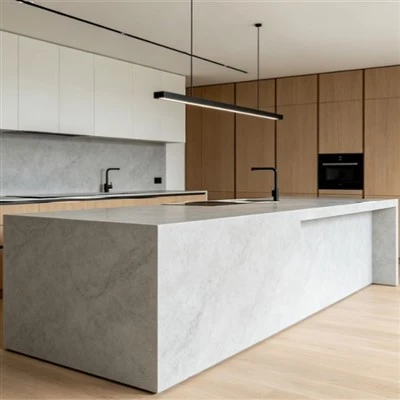
At the end of the day, matching quartz color for large projects isn’t about avoiding all variation—it’s about managing it. It’s about understanding that quartz is a natural-man hybrid, that batches have limits, and that clarity in communication between the designer, contractor, and supplier is non-negotiable. If you’re planning a large-scale project and worried about quartz color matching, I’m here to walk you through every step, from sample to installation, to make sure you get the exact look you want without the stress. Reach out to discuss your project needs, and we’ll share our color library, batch process details, and real client case studies to help you make the right choice.
Bathroom Quartz Countertop References
Quartz Surfacing: Material Composition and Performance Characteristics, Natural Stone Institute, 2022
Color Measurement for Construction Materials, Construction Specifier Magazine, 2021
Delta E Standards for Commercial Interior Design, International Interior Design Association, 2020
Manufacturing Processes for Engineered Stone, Stone World Magazine, 2023
Wuhu Junde New Material Technology Co., Ltd.
As one of the most experienced quartz slab manufacturers and suppliers in China since 1998, we warmly welcome you to wholesale top-quality quartz slab made in China here from our factory. If you have any enquiry about cooperation, please feel free to email us.
Address: No.8 Yulin Road, Xinwu Economic Development Zone, Anhui Province, China
E-mail: 1127319898@qq.com
WebSite: https://www.jundequartz.com/
